
A coffee packing contractor in Brazil bought a line rated at 60 bags a minute. On paper, one eight-hour shift should produce 28,800 bags. He was getting 12,400.
He assumed the machine was slow. The machine was fine. His shift was losing time in five places he had never measured, and the biggest one was not the machine at all.
This is the gap between rated speed and real output, and it is the single most expensive misunderstanding in packing machinery. A 60 bags per minute machine and a 45 bags per minute machine can produce the same tonnage per shift if the faster one loses more time.
The formula that explains it
Output = rated speed × scheduled time × availability × performance × quality.
That last three-part product is OEE, and most factories have never calculated it. Ours ran at 43% on the contractor’s line: 88% availability, 61% performance, 80% quality. Multiply them and the 60-bag line behaves like a 26-bag line.
Availability loss is time the machine is not running: changeovers, cleaning, breakdowns, waiting for film or product. Performance loss is running slower than rated. Quality loss is bags that get rejected, reworked, or scrapped.
Where the time actually goes
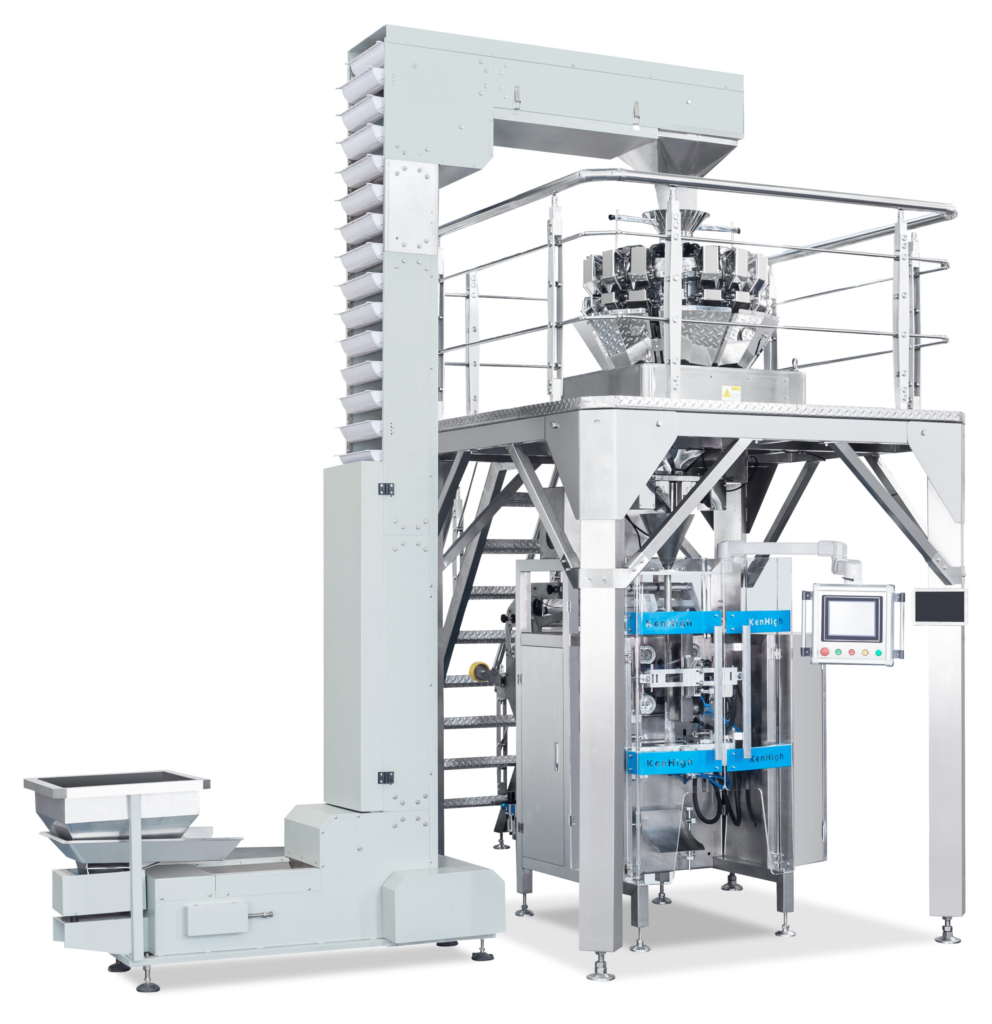
Changeovers. On this line, three product changes a day at 35 minutes each is 105 minutes out of 480 — 22% of the shift gone before anything else happens. The fix is rarely a new machine; it is recipe memory, a parts cart at the machine, and quick-release clamps. That alone moved him from 35 to 18 minutes.
Micro-stops. A film splice, a bag that misses the jaw, a scale head that faults and resets. Each one costs 20–90 seconds, none of them get written down, and together they were costing about 40 minutes a shift. Nobody records them because the operator fixes them before anyone notices.
Running below rated speed. Rated speed assumes ideal film, ideal product, and a steady fill. Real film drags, real powder bridges, and the machine gets dialled back to 45 to stop the rejects. This is performance loss, and it hides in plain sight because the machine is “running”.
Product and film waiting. A line that stops because the hopper ran dry or the film roll ran out is a scheduling problem, not an equipment problem. On this line it was 25 minutes a shift.
Rejects and rework. Bags that fail the checkweigher, bags with a wrinkled seal, bags that get cut open and refilled. At 80% quality, one bag in five was being lost. That is where the real money went.
How to measure it in three days
Do not buy software. Take a clipboard and log four things per shift for three days: the reason for every stop with start and end time, the actual bags produced per hour, the number of rejects and their cause, and the number of changeovers.
At the end you will have a number for each loss category, and the ranking will surprise you. On most lines the top two are changeover and micro-stops, neither of which shows up in a machine quotation.
Then calculate what each loss costs. At a $0.30 margin per bag, 40 minutes of micro-stops a shift is 2,400 bags a month — around $720 of margin, every month, from problems nobody wrote down.
When a faster machine is the wrong answer
If your OEE is under 55%, buying a faster machine makes the numbers worse, not better. A 90-bag machine with the same 40% losses produces less than a 60-bag machine running at 70%, and it costs more to run, more to change over, and more when it stops.
Fix the losses first. In our experience the sequence that works is: changeover time (biggest, cheapest to fix), then micro-stops, then quality, then speed. Only when a line runs above 70% OEE does buying more speed pay back.
This is also why two factories can buy identical machines and report completely different unit costs. The machine is the same; the losses are not.
If you want the arithmetic on what those losses cost per year, [what the machine charges you after delivery](https://jingrui-packingmachine.com/packing-machine-running-cost/) covers power, film, and spares, and [the real cost of small batches](https://jingrui-packingmachine.com/packing-machine-changeover-time/) covers the changeover side in detail.
What to ask a supplier before you buy
Ask what speed the quoted rate assumes: which film, which product, which fill weight, and at what reject rate. A supplier who quotes 60 bags a minute without stating those four conditions is quoting a laboratory number.
Ask how long a format change takes with two operators, in minutes, on video. Ask what the machine’s expected OEE is in a plant like yours — and if the answer is “it depends”, ask for two references running similar products and call them.
Ask how the machine behaves when it is starved of product or film. Machines that stop hard and need a full re-thread on every splice lose more time than machines that handle a splice in 30 seconds.
The last question is the one that separates a good buy from an expensive one: what is the realistic output per shift, not the rated output per minute. Get that in writing, and hold the acceptance test to it — we covered the acceptance side in [the first thirty days after the container arrives](https://jingrui-packingmachine.com/packing-machine-installation-first-30-days/).
Send us three days of your stop log and your current output, and we will tell you whether your bottleneck is the machine or the shift around it.


