
A cashew packer in Vietnam shipped four containers to Rotterdam last spring. The bags looked perfect coming off the line — flat, square, clean print. Three weeks later the importer sent photos: roughly 3% of the bags had lost their vacuum, and a few had visible oil seepage at the seal.
His first call was to his film supplier. The film was fine. The leak was in the seal bar, and it had been there for months.
We see this pattern constantly. Leaking bags get blamed on the film, the product, or the weather, when the actual cause is one of six mechanical conditions we can usually find in about twenty minutes with a seal tester and a pair of pliers.
The six seal failures we find on real lines

Temperature drift across the bar. A seal bar is not one temperature. Measure it with a contact thermometer at five points and you will often find 8–12 °C difference from center to end. The center burns, the ends under-seal, and the bag leaks at the corner nobody checks. On a 400 mm bar this is usually a worn heater cartridge or a loose thermocouple.
Pressure that looks right and is not. Most jaws are set to 3–5 bar. A gauge on the regulator can read 4 bar while the actual jaw pressure is 2.5 because of a leaking cylinder seal or a kinked air line. The bag seals on the outside and channels leak through the middle.
Dwell time shortened to hit speed. When a line is pushed from 50 to 60 bags a minute, the first thing that gets cut is dwell. Sealing needs time for the film’s sealant layer to melt and fuse; cut it by 30 milliseconds and the seal looks intact but peels at 1.5 N instead of 4 N. It survives the pallet and fails in the container.
Product in the seal zone. Powder dust, oil, or a single grain of rice sitting in the jaw creates a channel. This is why vertical powder lines with a poor forming tube fit leak at the top seal, and why liquid lines with a dripping nozzle leak at the bottom. No amount of temperature fixes contamination — it needs a knock-off, a vacuum port, or a different fill method.
Wrong sealant layer for the film structure. A bag can be perfectly sealed and still fail, because the inner layer was never designed for the product. Oil-based products need a specific sealant; high-fat powders attack standard PE. When a client changes film supplier to save 6% on material cost, this is the first thing that breaks.
No cooling before handling. A seal is still soft for 200–400 ms after the jaws open. Drop it straight onto a conveyor with any tension and you get micro-cracks along the seal edge. High-speed lines need chill bars or a longer drop.
How to find the cause in twenty minutes
Start with a dye penetration test: inject dye into a sealed bag, squeeze, and watch where it appears. Corner leaks point to bar alignment; channels through the middle point to pressure or contamination.
Then run a peel test. Cut a 25 mm strip across the seal, pull it at 90 degrees on a small tensiometer, and record the force. A proper seal on a 70-micron laminate runs 3.5–5 N; anything under 2.5 N will not survive a container.
Finally, check the jaw alignment with a strip of pressure-sensitive paper. An uneven pattern is a mechanical problem, not a settings problem, and no amount of parameter tuning will fix it.
If you want the fuller picture of which products cause this most often, our article on















When the machine is not the problem

Sometimes we get called out and the machine is innocent. Three cases worth checking before you book a service visit.
If the leak only started after a film supplier change, test the new film on the old settings before touching the machine. We have seen a 15% cheaper laminate with a 12-micron sealant layer fail at the same temperature that worked on the previous 25-micron film.
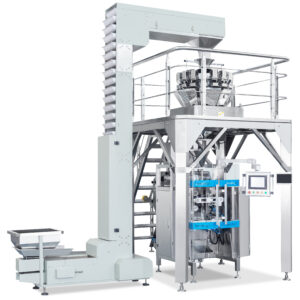
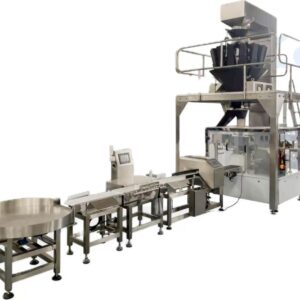
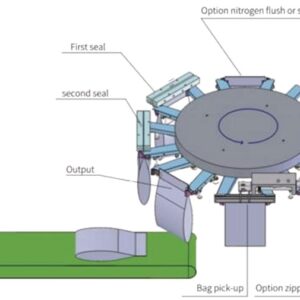
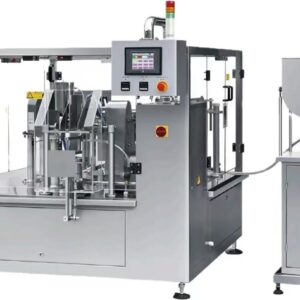
If the product changed — a new recipe with more oil, a new roast level — the fill method may need to change rather than the seal. Oily granulates need a [pre-made pouch machine](https://jingrui-packingmachine.com/product-category/pre-made-pouch-packing-machines/) with a proper fill station, not a VFFS former that smears product across the seal zone.
And if the leak rate is under 0.5% and the product is shelf-stable, it may not be worth chasing at all. Retail-ready vacuum coffee is a different case from a 25 kg sack of dried fruit.
For liquid and paste products, most leaks we see trace back to the nozzle and the fill level rather than the jaw, which is why the [liquid filling line](https://jingrui-packingmachine.com/product-category/high-speed-vertical-packing-machine/liquid-packing-machine/) uses a different seal geometry entirely.
What to specify when you buy
Ask for the seal bar’s temperature uniformity spec in writing, not just its maximum temperature. Ask what dwell time the quoted speed assumes, and whether that speed holds at 20 °C ambient or only in a climate-controlled hall.
Ask how many seal parameters are locked behind a password. Machines that let operators change dwell time without logging it are machines where your seal quality will drift within six months, and nobody will be able to tell you when it started.
One more number worth asking: what weight does the machine ship set to? If your bags are labelled 500 g and the machine leaves the factory set to 510 g, you are paying for that product every day — we covered the arithmetic in [what a gram of giveaway costs](https://jingrui-packingmachine.com/weighing-accuracy-giveaway-cost/).
Send us a video of a failed seal and the film structure, and we can usually tell you which of the six causes it is before you pay for a service call.
FAQ
Why do my bags leak only after sea freight?
Because the seal is strong enough to survive the pallet but not the vibration and pressure change of a container. A seal that peels at 1.5 N will hold on a conveyor and fail after two weeks of stacking. Always test peel strength, not just whether the bag holds air at the factory.
Can I fix leaking seals by raising the temperature?
Only if the seal is under-heated. If the bar is already at the correct temperature, more heat burns the sealant layer and makes the leak worse. Measure the bar at five points first — a 10 degree difference from centre to end means the temperature setting is not the real problem.
How do I test seal quality in-house?
A dye penetration test finds the leak location, and a peel test tells you the seal strength. Cut a 25 mm strip, pull it at 90 degrees, and expect 3.5 to 5 N on a 70 micron laminate. Below 2.5 N the seal will not survive export. Both tests take under ten minutes per sample.