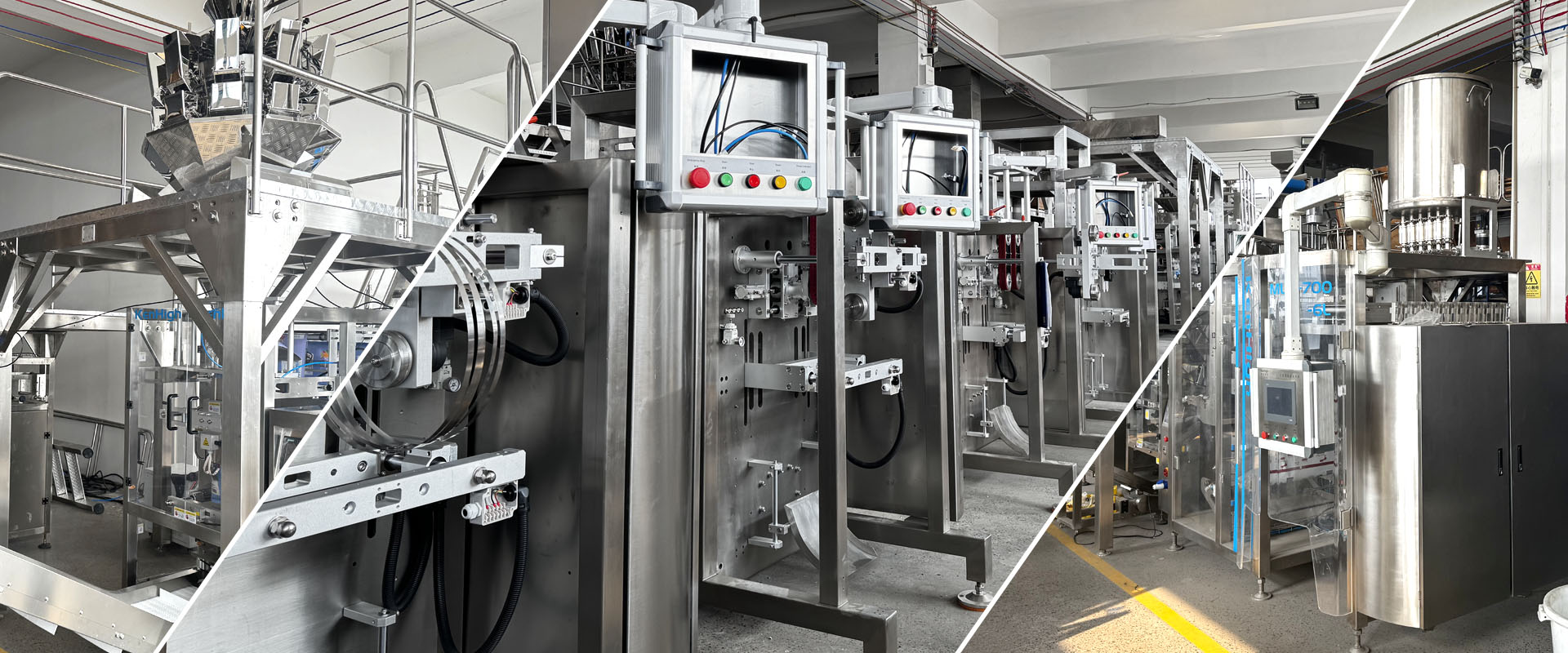
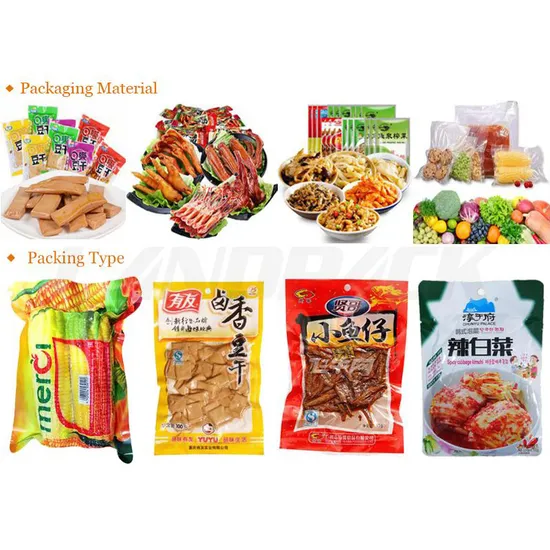
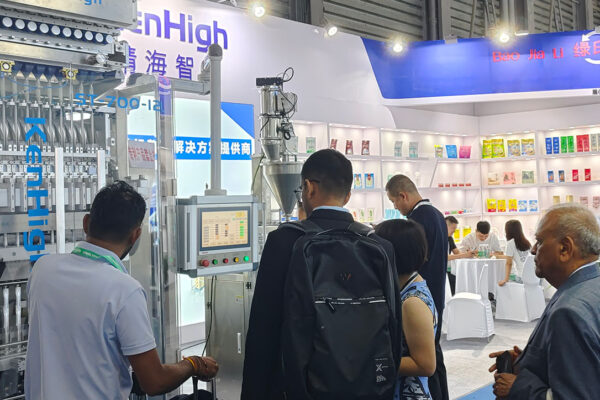
The autumn Canton Fair opens on October 15, and if you are sourcing a packing machine this year, the machinery hall will be exactly as it always is: loud, crowded, and full of booths where every machine is “CE certified,” “factory direct,” and “best quality.”
After 17 years of exhibiting on both sides of that hall, we can tell you that the difference between a good supplier and an expensive mistake rarely shows in the machine sitting on the booth floor. It shows in how the salesperson answers a few specific questions.
Bring this list. It works at Canton, at Interpack, or in any supplier’s showroom.
1. Can you run my product on video — before I fly home?
Any factory can run free-flowing granules on a demo video. Your product is the test. If you pack sticky date paste, oily spice powder, or hygroscopic protein powder, ask them to film your actual material running on the machine, with your target bag size.
A supplier who agrees within 24 hours has your machine type in the workshop. A supplier who hedges is telling you something.
2. What breaks first, and what does it cost?
Walk up to the machine and point at the sealing jaws, the cutting knife, and the dosing system. Ask: which of these wears out first, how many months under continuous running, and what does the replacement cost?
If the answer is a vague “all parts are durable,” leave. Real factories know their wear parts to the week, because their after-sales team replaces them. Ask for the spare parts price list with the quotation — a serious supplier sends it without being asked.
3. Show me the machine’s electrical cabinet
This takes thirty seconds and tells you more than the brochure. Open the cabinet door and look at the nameplates: Siemens, Schneider, Delta, or unbranded blanks. The components inside a packing machine decide whether your local electrician can service it in five years, or whether the machine becomes a parts orphan.
Also check the wiring neatness. A tidy cabinet usually means a tidy assembly line.
4. What is the real lead time — and what delays it?
“30 days” is the standard answer. The useful question is: what happened on the order that took 60? An honest supplier tells you which step slips — usually customization approvals from the buyer’s side — and how they prevent it. A supplier who has never had a delay has never shipped enough machines.
5. Who answers at 2 a.m. when my line stops?
Packing machines run production schedules, not office hours. Ask for the after-sales contact before you order, not after. Send a test message on WhatsApp or WeChat at an odd hour and see how long a real answer takes.
We are not saying it has to be instant. But a reply within a few hours, from an engineer rather than a sales rep forwarding your message, is what “24/7 support” should actually mean.
6. Can I talk to a customer in my region?
One reference call answers what ten catalogues cannot: how the machine cleared customs, how the installation went, and how problems were handled when — not if — something broke in the first month.
After the fair
Whatever you decide at the booth, do three things within a week, while the business cards are still on your desk. First, send your product details and bag sizes and ask for a layout drawing — the quality of the drawing tells you the quality of the engineering behind it. Second, ask for a quotation that lists wear parts prices separately. Third, follow up with the one supplier who answered the hard questions patiently, not the one with the biggest booth.
The Canton Fair rewards preparation. Ten minutes of the right questions in October saves months of regret the following year.
You will find our team in the machinery exhibition area during the autumn fair. If you are coming, message us on WhatsApp a few days ahead — we will have your product type in mind before you reach the booth.