A honey producer in Chile sent us a video last year. Their new liquid packing machine was working beautifully on water — filling, sealing, counting, no complaints. Then they ran actual honey through it, and within an hour the seals were leaking and the dosing pump was making noises it should not make. They assumed the machine was defective.
It was not defective. It was the wrong dosing system for a product that flows like syrup at 30 degrees and like glue at 20. We swapped the rotor pump for a heated hopper with a piston filler, and the same machine has run two shifts a day since. That job is why we always ask for a product video before recommending anything.
Seventeen years of factory trials teaches you which products hide problems. These five categories cause the most returns, reworks and bad reviews in the packing business — and the machine choices that avoid them.
The sticky ones: honey, sauce, date paste
Anything with viscosity above water changes the rules. Gear pumps cavitate. Valve seals wear twice as fast. And the film seal — the part nobody thinks about — picks up product drips that turn into weak seals and leaking cartons weeks later in a customer’s warehouse.
For pure liquids, a liquid packing machine with a piston dosing system handles viscosity up to several thousand centipoise. For thick pastes with particles — chili sauce with seeds, fruit puree — a pre-made pouch machine is usually the better call, because a formed pouch tolerates a messy fill zone better than a tube of film on a VFFS, and the pouch spout keeps the seal area clean. Add a heating hopper for anything that thickens when cool.
The dusty ones: flour, milk powder, protein
Fine powders look innocent and cause the most hidden cost in the industry. A jet of flour dust inside a forming tube coats the sealing jaws, and within a shift you get pinhole leaks that a warehouse in another country discovers three months later. Dust also settles on photo-eye sensors and causes phantom machine stops.
The fix is not complicated but it has to be designed in: an auger-fed VFFS powder machine with a dust extraction port at the forming collar, and an auger that doses by weight check rather than volume. On powders, dosing accuracy is profit — a 1% overfill on a 500-gram flour bag is five grams of free product in every bag, thousands of kilograms a year.
The fragile ones: biscuits, chips, frozen vegetables
The fastest way to ruin a fragile product is to drop it. A VFFS machine that forms bags around product falling half a meter works fine for rice. Drop a biscuit through that same path and you ship crumbs.
Fragile products need a gentler feed: belt conveyor instead of drop tube, shorter fall distances, and forming collars matched to the product, not just the film. Our biscuit packing machines and vegetable packing machines both run belt infeeds for exactly this reason. For frozen vegetables there is a second issue — condensation on the film in warm rooms — which is why those machines run with modified sealing temperatures that a standard setup will not get right.
The mixed ones: hardware and fastener kits
Counting 500 identical screws is easy. Counting a kit with six different items — bolts, nuts, washers, clips — into one bag, accurately, thousands of times a day, is one of the harder problems in packaging. Volumetric cups drift. Weighing scales get confused when items tangle.
A dedicated counting packing machine with vibrating bowl feeders and optical counters solves it: each component feeds from its own bowl, the optical counter verifies the count, and a mixed kit drops into one bag with an error rate measured in tens per million. We have customers packing furniture kits this way who went from three operators per shift to one.
When a pre-made pouch beats a form-fill-seal machine
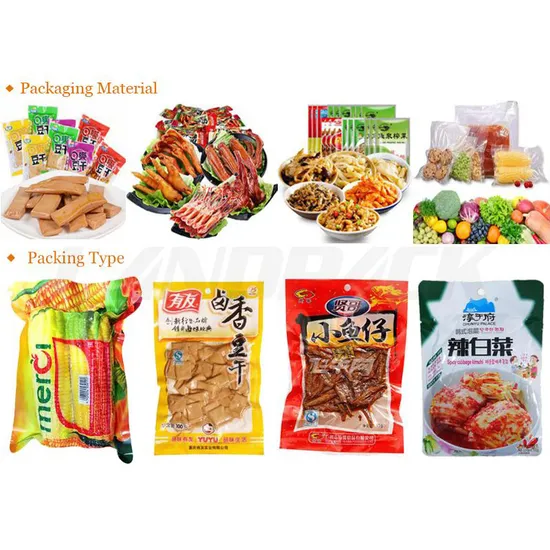
There is a category of products where the honest answer is that no VFFS machine is the right tool: ready meals, marinated meat, anything needing vacuum. Vacuum on a formed pouch is possible, but the vacuum quality and the seal reliability are both better on a pre-made pouch vacuum machine, where the pouch is already shaped and the seal bars close on flat, product-free film. For food producers entering retail chains, that difference is what passes or fails a shelf-life audit.
The pattern behind all five
None of these problems is exotic. They share one root: the machine was chosen from a catalogue, not from the product. The buyers who get good results do the same three things every time — they send a product sample or a video before ordering, they ask for a trial run on their actual material, and they ask the supplier which parts wear out first and what they cost.
That third point matters more than most buyers expect, and it is the same logic we covered in our guide to judging a supplier at the Canton Fair. If you are weighing a single-line machine against a multilane line for stick products, the output math in our multilane stick packing article will save you a miscalculated investment. And if your product is on the difficult list above, our FAQ page covers lead times, shipping and the after-sales process in plain numbers.
If you are not sure which category your product falls into, send us a short video of it — running, flowing, crumbling, whatever it does. Our engineers will tell you which machine handles it, and just as honestly, which one will not.
Frequently asked questions
Can you test my product before I order a machine?
Yes, and you should insist on it — here or anywhere else. Send five to ten kilograms of product plus your target bag size. We film the full trial run and send you the video with the machine settings, so you can see speed, seal quality and dosing accuracy before talking money.
What does a product trial cost?
For standard trials, nothing. You cover the courier of your samples; the machine time, the video and the engineering recommendation are free. Complex customizations — special infeeds, unusual bag shapes — get quoted separately before any work starts.
Which machine type breaks down most often?
Not a type — a spec. Machines fail early when buyers undersize the dosing system or skip the dust and heating options to save money. A correctly specified machine for your product category is far more reliable than a bigger, more expensive one pushed outside its design envelope.