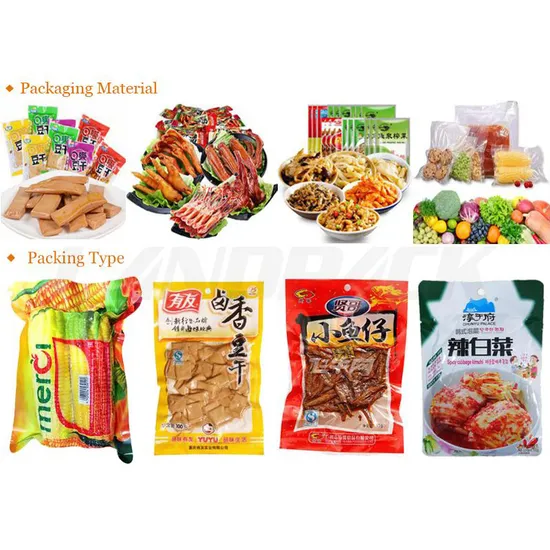
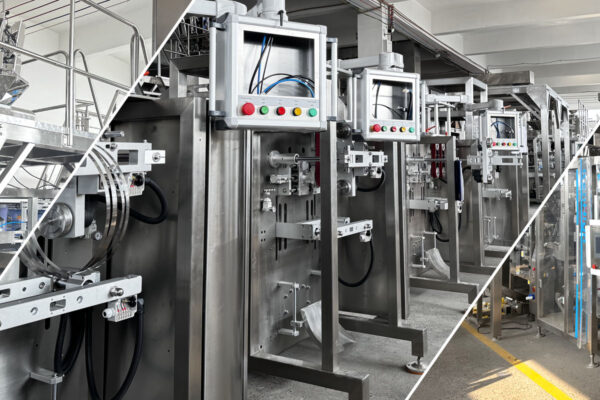
Last month a coffee roaster from Colombia sent us three bags of the same coffee, packed three different ways, and asked one question: which one should he buy a machine for? It is the best question a buyer can ask, and most salespeople answer it with whichever machine they have in stock. After 17 years of building packing machines, here is how we answer it when nobody is trying to sell you anything.
The Pillow Bag: Cheap, Fast and Invisible
The pillow bag is a flat back-sealed pouch formed from film on the machine. It is the cheapest package in the industry — the film costs the least, the machine runs the fastest, and almost nothing can go wrong mechanically. If your coffee sells to cafes in 1kg bulk bags, or your product moves through wholesale channels where nobody sees the bag, the pillow bag is the rational choice. Its weakness is the shelf: it cannot stand up, it shows one printed face, and next to a stand-up pouch it looks like a commodity. Some products are commodities. Pack them accordingly.
The Stand-Up Pouch: The Shelf Fighter
The stand-up pouch — doypack, gusseted, zippered — exists for one reason: the last three meters before the customer decides. It stands on the shelf, it reseals, it carries a full-color printed billboard on every face. The costs are real: the premade bag costs several times more per unit than formed film, and a pre-made pouch machine runs slower than a VFFS line. If your product competes on a retail shelf against branded rivals, that cost is not overhead — it is your marketing budget doing its job.
The Brick Bag: Buying Time
The vacuum brick bag answers a different question entirely: not “how does it look?” but “how long does it last?” The machine vacuumizes the bag before sealing, so ground coffee holds its aroma 12 to 18 months and milk powder stays free-flowing. The bag hardens into a rigid block that stacks on pallets without collapsing — which is why coffee exporters shipping containers across oceans end up at the brick bag format more often than any other. For vacuum-sensitive ready food in pouches, our vacuum premade pouch machine covers the same job in a retail-friendly bag.
The Honest Decision Logic
Strip the marketing away and three questions decide the format. First: where does the customer meet the product? Wholesale and food-service — pillow bag. Retail shelf — stand-up pouch. Second: how long must it survive? Under six months, vacuum buys you nothing. Over a year, the brick bag often pays for its machine with reduced spoilage alone. Third: what does the bag cost as a share of the product? On a $2 bag of premium coffee, a 4-cent bag upgrade is noise. On a $1 bag of sugar, it is the whole margin.
Here is the part suppliers rarely mention: one brand often needs two formats. Our Colombian roaster ended up with a plan, not a single machine — pillow bags 1kg for his domestic cafe trade, brick bags for his export containers, and a stand-up pouch line scheduled for next year when his retail launch funds arrive. A supplier who insists one format fits everything is telling you about his inventory, not your business.
Test the Format Before You Buy the Machine
Whatever the format, the same rule applies: send five to ten kilograms of your product and we film the machine running it. Fill accuracy, seal quality, the actual bags — you judge with your eyes, not our brochure. And if you are comparing suppliers at the Canton Fair in two weeks, bring the questions from our buyer’s checklist: the answers separate factories from trading companies faster than any badge on the booth. Products that misbehave in every format — sticky honey, dusty flour, fragile biscuits — have their own playbook, which we covered in what 17 years of factory trials taught us about hard-to-pack products.
FAQ
Can one machine run all three formats? No — pillow bags form on a VFFS line, premade pouches need a pouch-handling machine, and brick bags need vacuum equipment. Each format is a different machine, which is exactly why the choice matters so much.
Which format is best for coffee export? For sea freight over two to four weeks and shelf life over a year, the vacuum brick bag. For shorter routes and faster turnover, a pillow or gusseted bag cuts cost with little downside.
Will you help us choose? Yes — send your product, target market and shelf-life requirement, and we will recommend a format. If we think you do not need the machine you asked about, we say so. A customer who bought the right machine comes back; one who bought the wrong one only comes back angry.